
Volkswagen Just Admitted Something the Car Industry Has Been Avoiding: There Are Too Many Cars
Volkswagen is planning to cut its model range by around 50% and reduce vehicle variants and options by roughly 75% by 2035. Behind the restructuring lies a bigger question for the entire automotive industry: did manufacturers create more choice than buyers ever really needed?
Trusted by
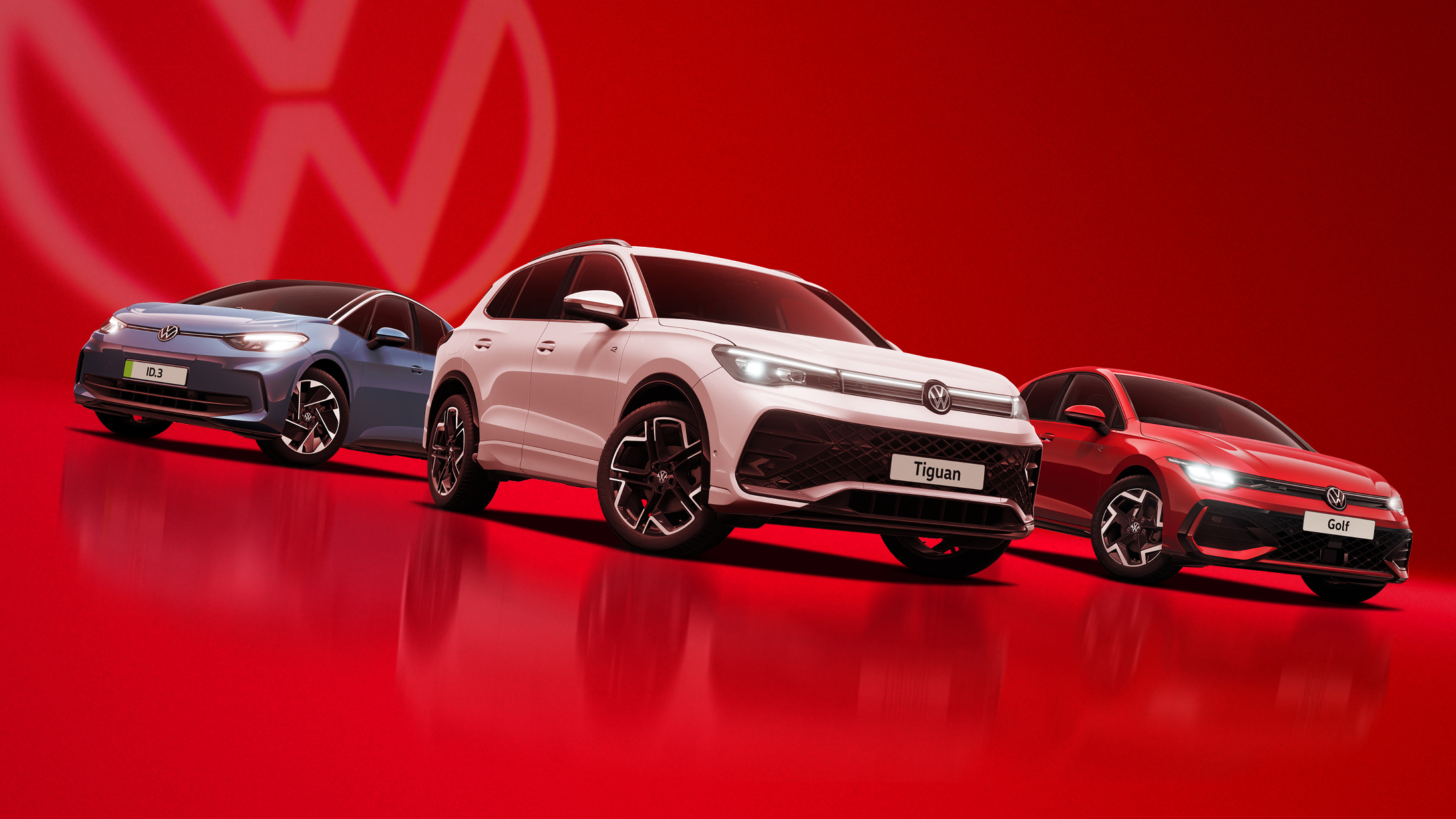
For years, the automotive industry told us that more choice meant a better car.
More models. More engines. More trims. More equipment packages. More ways to configure exactly the car we wanted.
Now Volkswagen is moving in the opposite direction.
In its new “Future Plan 2030”, approved on 3 September, Volkswagen plans to reduce its model range by around 50% by 2035 and cut variants and equipment combinations by roughly 75%. The company gives a striking example: more than 2,300 different seat variants could eventually be reduced to around 100.
This isn't simply about cutting costs.
It is an admission that the automotive industry may have created more complexity than buyers actually need.
The problem isn't just too many models
The bigger issue is the number of versions underneath them.
For a manufacturer, every different engine, trim, seat, wheel or equipment package adds complexity to production, logistics and inventory.
And when a particular version sells in tiny numbers, that complexity remains even when demand doesn't justify it.
JATO has highlighted vehicle-line complexity as a significant challenge for manufacturers, with large numbers of variants generating limited sales while increasing production and distribution complexity.
Volkswagen therefore isn't simply saying:
“We will build fewer cars.”
It is saying:
“We will build fewer versions of the cars we already make.”
That's a much more important distinction.
And it might actually be good for buyers
Buying a car today can be surprisingly complicated.
You aren't simply comparing two models. You're comparing engines, transmissions, trims, safety packages, infotainment systems, wheels and dozens of smaller options.
A car might look affordable until you add the equipment you actually want.
Another might cost more but include that equipment as standard.
More choice, therefore, doesn't always mean more freedom.
Sometimes it means more noise.
A simpler range could mean fewer overlapping trims, clearer equipment levels and easier comparisons.
For mainstream buyers, that could be a genuine improvement.
But there is a price to simplification
The versions most vulnerable to this trend are often the most interesting ones.
Special engines.
Low-volume performance variants.
Unusual body styles.
Niche models.
These are precisely the products that become difficult to justify when manufacturers start prioritising scale.
If a particular version sells only a small number of units, its development and manufacturing costs become harder to spread across enough cars.
For manufacturers, fewer variants can mean greater efficiency.
For enthusiasts, it could mean fewer weird, distinctive and genuinely special cars.
The real lesson for buyers
Perhaps the biggest change isn't how many cars manufacturers will offer.
It's how we should choose between them.
The question shouldn't simply be:
“Which model do I want?”
It should be:
“Which specific car actually fits my needs?”
Because our needs don't become simpler just because manufacturers reduce their ranges.
We still need to consider safety, running costs, equipment, practicality, reliability and depreciation.
A manufacturer can give us fewer choices.
That doesn't automatically make the right choice easier.
And this is where better automotive research becomes more valuable.
The goal isn't to find more cars.
It's to understand which one is actually worth buying.
Volkswagen may be preparing to make its cars simpler to manufacture and easier to configure.
For buyers, the challenge remains exactly the same:
choose wisely.

Continue your research
All articles →-
Industry News
EU Lawmakers Strike Deal to Keep Combustion Engines Past 2035
A new compromise between major political groups in Brussels opens the door for petrol, diesel, and hybrid cars to remain in European showrooms beyond 2035.
-
Industry News
The Car You Can Afford Might Be the Car You Can't Afford
A car can fit your budget on the day you buy it and still be completely unaffordable over the next five years. The real cost of a car hides in depreciation, fuel, maintenance, insurance, tyres and the way you actually use it. Here is what buyers should calculate before looking at the price tag.

-
Industry News
The Greek Car Market Is Sending a Clear Message: Small SUVs Are the New Default
The Greek car market is growing, but the most interesting story is not simply how many cars are being sold. It is what buyers are choosing. With B-SUVs accounting for 37% of new-car registrations so far this year, the compact SUV has become one of Greece’s defining choices. But popularity does not automatically mean suitability.
_77761_485328_type15037.jpg)