The Car Is No Longer Just a Machine: Why the Future Belongs to the Software-Defined Car
The biggest automotive challenge today is no longer only the battery or fuel economy. It is whether a car can keep evolving after purchase, learn from its own data, and defend itself against digital threats. The industry is moving rapidly toward software, edge AI, and connectivity.
Trusted by

For decades, a car was defined by its engine, gearbox, chassis, and horsepower. Today, however, a new force is changing the automotive industry: software.
For years, manufacturers competed through performance, power, and design. Now, the real competition is moving into code. Software and electrical architecture have become the foundation of nearly every modern automotive innovation.
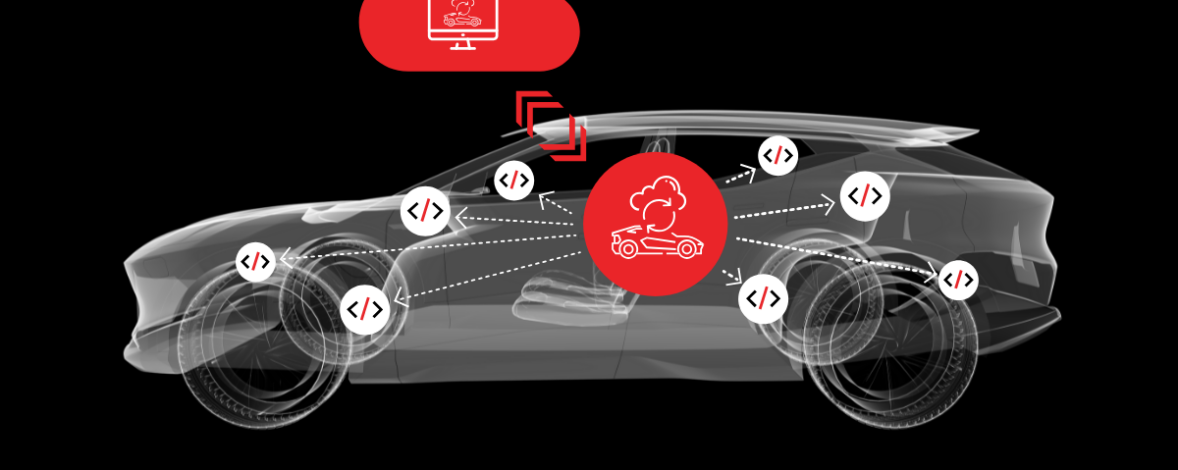
This changes the key question from "How fast is the car?" to "How intelligent can it become over time?". A software-defined vehicle can improve through over-the-air updates, gain entirely new features, adapt to its driver's habits, and process AI directly inside the vehicle.
This represents one of the biggest shifts the automotive industry has ever experienced. A car is no longer a static product that remains unchanged for years after purchase. Instead, it is becoming a digital platform that continuously evolves—much like a smartphone or a computer.
As a result, the way we evaluate vehicles is also changing. Engine performance, fuel economy, and driving dynamics will always matter, but they are no longer the whole story. Software quality, update frequency, cybersecurity, and the overall digital experience are becoming equally important factors.
At the same time, this transformation introduces a new challenge: cybersecurity. The more connected vehicles become, the more critical it is to protect them against digital threats. In the future, a vehicle's safety will depend not only on airbags and crash structures, but also on the security of the software running behind the scenes.
The real question for the coming years is therefore not whether cars will become electric. It is whether they will become intelligent enough to evolve alongside their owners. The companies that will lead the industry may not necessarily build the most powerful engines, but the most capable software ecosystems.
Perhaps the most important component of tomorrow's car will not be found under the bonnet, but within the millions of lines of code that make the vehicle smarter, safer, and more capable every day.
Perhaps the most important component of tomorrow's car will not be found under the bonnet, but within the millions of lines of code that make the vehicle smarter, safer, and more capable every day.
Continue your research
All articles →-
Industry News
What If Your Car Never Became Old?
Buying a new car has always followed the same cycle. After a few years, technology moves on, safety improves, new features appear, and many people start…
-
Industry News
Honda Turns to Mitsubishi for a Real Ladder-Frame Truck
Honda plans to launch a traditional body-on-frame pickup built by Mitsubishi from 2028, targeting global markets beyond its unibody Ridgeline.

-
Industry News
Car of the Year 2027 in Greece: The 44 Contenders, and the Petrol and Hybrid Picks Worth Your Attention
44 new models are chasing the Car of the Year 2027 title in Greece. Here's how the contest works, why this year's list is so long, and which non-electric contenders deserve a place on your shortlist.