Inside the Toyota Mirai: Toyota's Hydrogen Bet Explained
How the Toyota Mirai Turns Hydrogen Into Electricity (And Why It Still Matters in 2026) The Toyota Mirai is one of the very few production cars on sale today…
Trusted by
How the Toyota Mirai Turns Hydrogen Into Electricity (And Why It Still Matters in 2026)
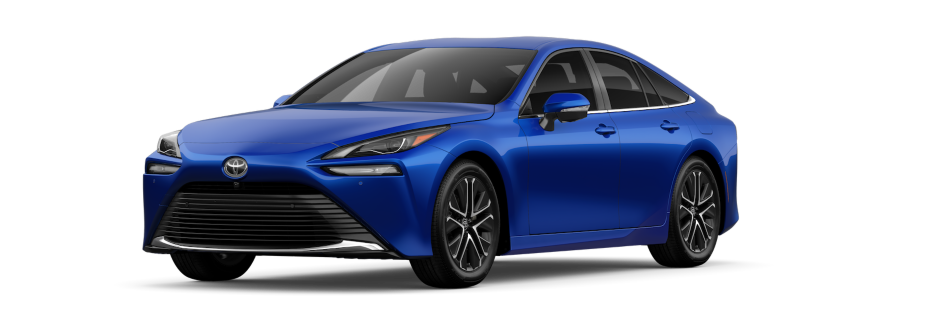
The Toyota Mirai is one of the very few production cars on sale today that runs on hydrogen instead of a battery or gasoline tank — and for 2026, Toyota is still betting on it. While most of the automotive world has gone all-in on battery EVs, the Mirai takes a different route to zero-emission driving: it makes its own electricity onboard, using hydrogen gas and a fuel cell stack, and emits nothing but water vapor out the tailpipe.
Here's a look at how the technology actually works, what's changed for 2026, and where hydrogen fits in the wider EV conversation.
WHAT IS A FUEL CELL, EXACTLY?
A fuel cell electric vehicle (FCEV) like the Mirai doesn't burn hydrogen the way a combustion engine burns gasoline. Instead, it combines hydrogen with oxygen from the air inside a fuel cell stack, triggering a chemical reaction that produces electricity, heat, and water. That electricity powers an electric motor, exactly like a battery EV — the difference is where the electricity comes from.
Refueling works much like a gasoline stop: hydrogen is pumped through a nozzle into carbon-fiber-reinforced tanks, where it's stored under high pressure until the fuel cell needs it. That's the core appeal of hydrogen over batteries — a fill-up takes minutes, not the 20–40+ minutes even fast DC charging requires.
POWERTRAIN AND PERFORMANCE
The 2026 Mirai's fuel cell electric powertrain produces 182 horsepower and 221 lb-ft of torque, sent to the rear wheels through a one-speed automatic transmission, paired with a 310-volt battery pack that helps manage power delivery and captures energy under braking, similar to a hybrid system.
Range is where the Mirai makes its strongest case against battery EVs. The EPA-estimated driving range sits at 402 miles, and Toyota Canada lists up to 647 km on a single tank — figures that rival or beat many long-range battery EVs, without the long charging stop.
WHAT'S NEW FOR 2026
Toyota hasn't overhauled the Mirai this year — it's more of a refinement than a redesign. There are no major changes for 2026, though 19-inch black machine-finished aluminum alloy wheels are now standard equipment across the range. The car remains a single-trim, single-configuration model: there's one mechanical setup with no packages or factory options, and paint color is the only real choice on the order sheet.
Inside, a 12.3-inch gauge cluster includes an ECO drive indicator that scores the driver's efficiency and provides acceleration guidance, while hydrogen fuel level and estimated range are always displayed. A 12.3-inch central touchscreen handles wireless smartphone mirroring, and a 14-speaker JBL audio system adds satellite radio, a WiFi hotspot, and cloud-based navigation.
Safety tech is up to date too: the 2026 Mirai comes with Toyota Safety Sense 3.0, bundling a pre-collision system with pedestrian detection, full-range dynamic radar cruise control, Lane Tracing Assist, Proactive Driving Assist, and Traffic Jam Assist for congested roads.
SAFETY OF THE HYDROGEN SYSTEM ITSELF
Storing pressurized hydrogen naturally raises safety questions, and Toyota has engineered several layers of protection into the tank system. If the car's sensors detect a leak or a collision, the hydrogen tank valves are designed to close automatically, preventing further gas from escaping — any hydrogen that does leak simply disperses into the atmosphere rather than pooling. The tanks themselves have been tested against federal safety standards, including FMVSS requirements.
PRICING AND OWNERSHIP PERKS
Pricing for the 2026 Mirai starts at $51,795 plus a $1,195 processing fee, though listings vary slightly by source and trim. Toyota continues to sweeten the deal for early hydrogen adopters: buyers get up to $15,000 in complimentary hydrogen fuel, valid for six years or until the credit runs out for purchases, and three years for leases. Coverage is also generous — an eight-year/100,000-mile warranty covers key fuel cell components, alongside a ten-year/150,000-mile warranty on hybrid battery components — and buyers get a complimentary rental car for up to 21 days during the first three years of ownership or lease, useful for longer trips outside hydrogen station coverage.
THE CATCH: INFRASTRUCTURE
The Mirai's biggest limitation isn't the car — it's the fueling network around it. The Mirai still lives or dies by access to hydrogen stations, and that reality is what keeps it from becoming a mainstream alternative to battery-electric sedans. Hydrogen refueling infrastructure remains concentrated in a handful of regions (California is the main U.S. hub), which makes the Mirai a compelling car mainly for drivers who live near a station rather than a nationwide or Europe-wide solution — at least for now.
SHOULD HYDROGEN MATTER TO YOU?
For markets like Greece and the wider EU, where hydrogen refueling networks are still in early stages, the Mirai is less about "should I buy one today" and more about understanding where fuel cell technology could fit as infrastructure expands. It's a preview of an alternative path to zero-emission mobility — one built around fast refueling and long range rather than charging time and battery size. Whether hydrogen ends up complementing battery EVs or remaining a niche, the Mirai remains the clearest real-world example of what the technology can do today.
Researcher and writer: Nikolaos Korakianitis
Continue your research
All articles →-
Industry News
Honda Turns to Mitsubishi for a Real Ladder-Frame Truck
Honda plans to launch a traditional body-on-frame pickup built by Mitsubishi from 2028, targeting global markets beyond its unibody Ridgeline.

-
Industry News
Car of the Year 2027 in Greece: The 44 Contenders, and the Petrol and Hybrid Picks Worth Your Attention
44 new models are chasing the Car of the Year 2027 title in Greece. Here's how the contest works, why this year's list is so long, and which non-electric contenders deserve a place on your shortlist.
-
Industry News
AUTO ATHINA 2026: The Complete Guide, Plus How to Use the Show to Pick Your Next Car
Greece's biggest ever car show opens on October 3 with 52 brands under one roof. Here are the dates, tickets and practical info, plus a smart plan to leave with a clear answer, not just a bag of brochures.
