
Discovering Safety: The Innovations That Make Driving Safer
The future of car safety
Trusted by
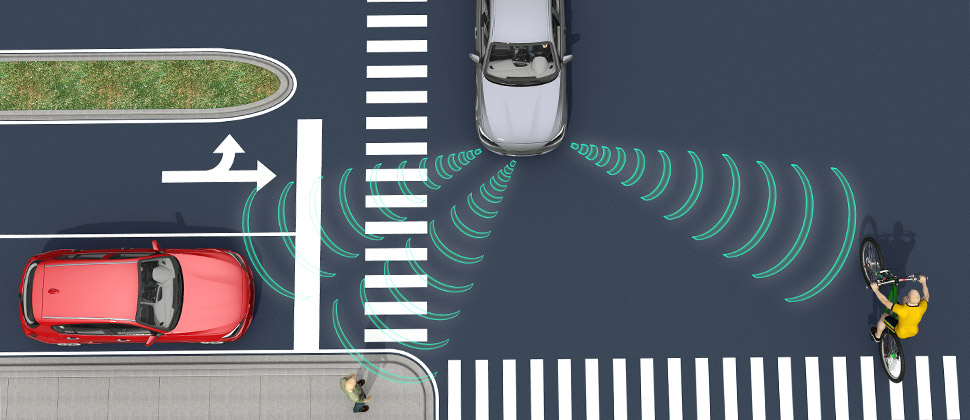
The safety features of a car are not as visible and attractive as other features, but they still play an extremely important role in the success of any vehicle, as no one wants to buy a car without safety for their daily driving. Today, people are more concerned about the safety of their car than ever before.
In the past decades, the automotive industry has shown significant improvement in the measurements and safety features of cars for their passengers and pedestrians. In addition, today's car safety tests evaluate vehicles through tests on multiple safety factors.
The safety features that exist today can be divided into two types, active safety features and passive safety features. We can understand that active and passive safety in cars is an important phenomenon in the modern automotive industry, because they judge the safety of a car. So what is active safety in cars? Active safety features reduce the likelihood of accidents by warning the driver or helping him control the car. Various active safety features are integrated into the cars available today. These systems are always active while driving. The types of active safety features are as follows:
“Anti-lock” brakes ( ABS ): ABS prevents the vehicle’s tires from locking up when the brakes are applied. If the tires lock up when the driver applies the brakes, this can cause damage in two ways. First, the sudden stop can damage the brakes and other components of the car, while the sudden change in speed can also harm the passengers.
Electronic Stability Control ( ESC ): ESC is a computer technology that detects changes in friction between the car and the road. It automatically applies the brakes to assist the steering process. This occurs when the driver loses control of the steering wheel.
Adaptive Cruise Control ( ACC ): Adaptive cruise control is a sensor-based system that reduces and increases the speed of the car within a set range, to maintain a safe distance from other vehicles on the road (usually on a highway).
Tire Pressure Monitoring System ( TPMS ): The tire pressure monitoring system is an electronically installed system that detects the air pressure inside the car's tires in real time.
Lane Departure Warning: The lane departure warning system warns the driver if the vehicle begins to move outside its lane area.
Head-Up Display ( HUD ): The head-up display is a small transparent glass screen that acts as a monitor, which is mounted on the dashboard at a comfortable distance from the driver.
Night Vision Systems ( NVS ): The night vision system provides information about the area beyond the limit of lights. This system uses thermal cameras, HUD display, infrared rays and other technologies to detect the information.
Passive safety refers to all measures that aim to reduce or avoid the risk of injury in the event of an accident. A passive safety feature is one that remains inactive until activated.
However, imagine that every thirteen minutes, someone in the United States dies in a car accident and every ten seconds someone is injured. Car accidents in the United States cause approximately 41,000 fatalities annually. As a result, over 3 million injuries occur each year (in the United States).
According to a study by Forbes magazine, active safety technologies are estimated to have reduced traffic accident mortality by 30%. Thus, we observe that advances in vehicle safety technology can eliminate traffic accidents. Another data announced the number of traffic accident deaths in the US in 2021, which was shocking.
The National Highway Traffic Safety Administration (NHTSA) announced that there were 42,915 traffic accident deaths in 2021, in the US alone. An average of 117 victims per day, which is the highest total number in 16 years. So, despite the increase in technology and its contribution to active and passive car safety, traffic accidents are increasing every year. Unfortunately, this is because people are driving more and more dangerously today and car safety systems cannot always save them. This needs to change and we should all be more altruistic when we drive. Data from the NHTSA and several other studies worldwide have shown that 90% of car accidents are due to human error by the driver. It is a worrying fact that while car safety technology has improved significantly in recent decades with the rise of driver assistance systems (ADAS), the driving community still has several challenges that need to be addressed immediately. In conclusion, car safety will continue to evolve, but even with the help of technology, improving passive and active safety in vehicles is still the most difficult task of the automotive industry and that is why we all need to be fully aware of this issue.
Continue your research
All articles →-
Industry News
Honda Turns to Mitsubishi for a Real Ladder-Frame Truck
Honda plans to launch a traditional body-on-frame pickup built by Mitsubishi from 2028, targeting global markets beyond its unibody Ridgeline.

-
Industry News
Car of the Year 2027 in Greece: The 44 Contenders, and the Petrol and Hybrid Picks Worth Your Attention
44 new models are chasing the Car of the Year 2027 title in Greece. Here's how the contest works, why this year's list is so long, and which non-electric contenders deserve a place on your shortlist.
-
Industry News
AUTO ATHINA 2026: The Complete Guide, Plus How to Use the Show to Pick Your Next Car
Greece's biggest ever car show opens on October 3 with 52 brands under one roof. Here are the dates, tickets and practical info, plus a smart plan to leave with a clear answer, not just a bag of brochures.
